
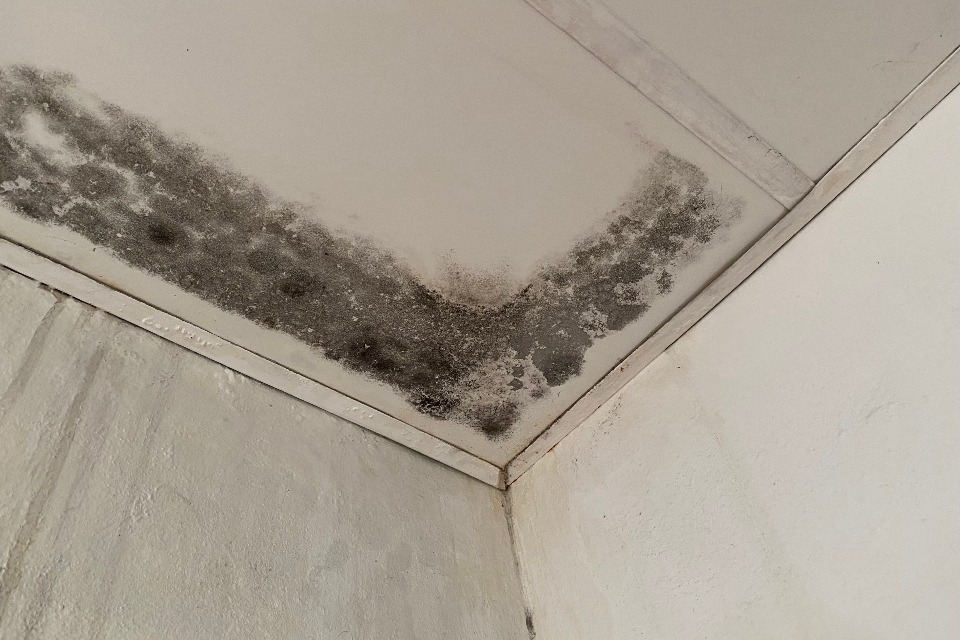
Phase 2 of Awaab's Law now has a confirmed date. From 30 November 2026, the Hazards in Social Housing (Prescribed Requirements) (England) (Amendment) Regulations 2026 extend the statutory repair timescales beyond damp and mould to seven further hazard categories. The government set the date in July and published guidance alongside it.
The date is worth pausing on. 30 November is the first day of meteorological winter. For most landlords, the first hazard they meet under the new rules will be excess cold, in the week the rules take effect.
What actually changes
Since October 2025, Phase 1 has applied the clocks to emergency hazards and to damp and mould where they present a significant risk of harm. Phase 2 keeps all of that and adds seven categories:
- Excess cold
- Excess heat
- Falls on the level, on stairs and between levels
- Structural collapse
- Fire and explosions
- Electrical hazards
- Domestic hygiene, personal hygiene and food safety
Phase 3 follows in 2027 with the remaining HHSRS hazards, apart from overcrowding.
The timescales themselves do not change. What changes is how many situations they now apply to:
- Emergency hazards: investigate and make safe within 24 hours of becoming aware
- Significant hazards: investigate within 10 working days of becoming aware
- Written summary to the resident: within 3 working days of the investigation concluding
- Relevant safety work: within 5 working days of the investigation concluding
- Further preventative work: begin within 5 working days, or as soon as practicable and within 12 weeks
The definition that does the work
Most summaries of Phase 2 list the hazards and stop there. The harder question is which hazards count as significant, and the guidance answers it with a test that deserves more attention than it gets:
A significant hazard is a risk of harm to the occupier's health or safety that a reasonable lessor with the relevant knowledge would make safe within 15 working days.
Two things follow from that. First, the standard is objective. It is not what your team can manage with the budget, the staffing and the contractor availability you happen to have this winter. It is what a reasonable landlord would do. Courts can hold you to that.
Second, it is individual. The same temperature in the same flat can be a significant hazard for one household and not for another. Age, disability, health conditions and other vulnerabilities all form part of the assessment, and a resident does not need to be vulnerable for a hazard to qualify.
That combination, an objective standard applied to individual circumstances, is what makes Phase 2 harder to operationalise than Phase 1.
Why excess cold is the difficult one
Damp and mould leave evidence. A surveyor can stand in the room weeks later and see the wall.
Excess cold does not work that way. It is a condition that exists over time, and then stops existing. If a resident reports in February that their home was unheatable in January, what does anyone actually inspect? The conditions that made it a hazard have gone. So has the evidence, unless something was recording.
It is also the hazard where the guidance gives you least to hold onto. The Phase 2 guidance sets no temperature thresholds and no duration criteria for excess cold or excess heat. Detailed triage is deferred to separate hazards guidance. In practice that means your own judgement, applied consistently, and documented well enough to defend.
Your records are the defence
Where a landlord cannot meet a timescale, the position rests on having used all reasonable endeavours. That is not a state of mind. It is a paper trail, and the guidance is specific about what it expects landlords to keep:
- When you first became aware of the hazard, and how you became aware
- Every attempt to gain access, including dates, times and methods
- When a written summary was given, which is not the same as when it was received
- Tenant circumstances, vulnerabilities and communication preferences
- Investigation findings, with photographs where appropriate
- Any material change in the hazard while the work was outstanding
Read that list as a description of a system rather than a filing habit. Most of it has to be captured at the moment it happens, by whoever is closest to the property, or it does not get captured at all.
A two month readiness check
Five questions worth putting to your team before the end of November:
- Can you evidence the moment you became aware of a hazard, across every route a report arrives by, including repairs calls, contractors, housing officers and third parties?
- Does your triage distinguish significant from routine against the reasonable landlord test, rather than against current capacity?
- Do your systems record when a written summary was given, separately from when it was sent?
- For excess cold, what would you produce to show the conditions inside a property three weeks ago?
- Who decides, at four o'clock on a Friday in December, whether something is an emergency, and does that decision get written down?
If the last two are uncomfortable, that is the honest starting point for the next eight weeks.
What monitoring does, and what it does not
We should be straight about this, because plenty of people will spend the autumn being told otherwise.
Sensors do not make an organisation compliant. Compliance is the investigation, the communication with the resident, the safety work and the wider legal duties that sit around all of it. No device does any of that.
What continuous monitoring does is narrower and more useful than the marketing usually suggests. It gives you an earlier and better founded view of conditions inside a property, and it leaves a dated record of what those conditions were, which is exactly the thing excess cold and excess heat otherwise destroy.
There is a trade in that worth naming. Better awareness can start the clock sooner. A landlord who learns about a hazard on day one has less slack than one who hears about it in week three. They also have three more weeks in which to fix it before it becomes a complaint, a claim or a coroner's question. The duty applies either way. The only real choice is whether you meet it knowingly.
Phase 2 arrives in two months, on the coldest day of the year so far. The organisations that find it manageable will mostly be the ones that spent this autumn on the unglamorous part: how a hazard gets noticed, who decides what it is, and where that gets written down.